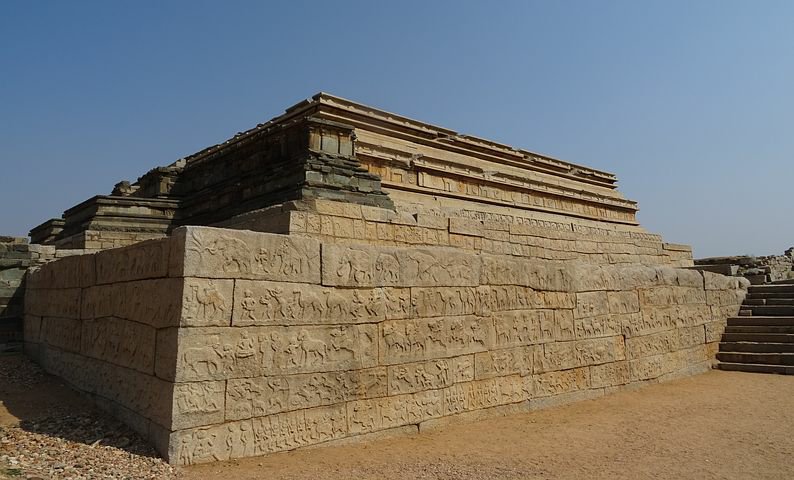
Art & architecture of hampi

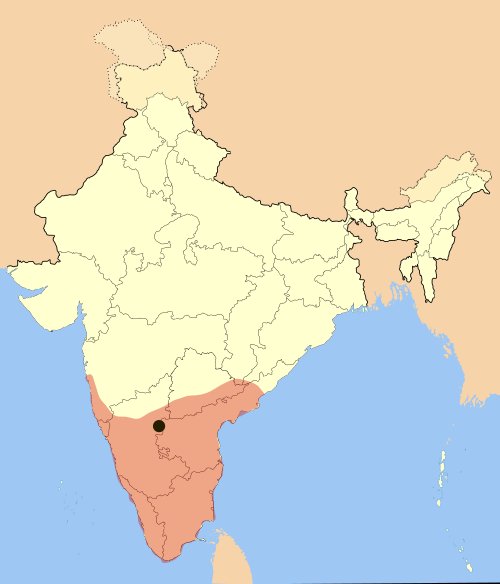
The Vijaynagar Empire was founded by Harihara and Bukka in AD 1336 and made Hastinavati (Hampi) as the capital city. They ruled over Andhra, Karnataka, Tamil Nadu, and parts of Kerala in southern India. Here, we are giving the gist of cultural history of Vijaynagar Empire that will refine the knowledge about how architecture, art, music and literature developed under this kingdom.

Architecture under vijaynagar empire

1. The temple building activity of the Vijayanagar rulers produced a new style, called the Vijayanagar style. Though often characterized as Dravida Style, it had its own distinct features.
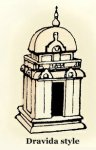
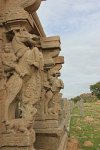
2. The distinct features of the architecture were the pillars and the complicated manner in which they were sculptured.

3. The horse was the most common animal to be depicted on the pillars.
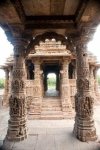
4. The temples had a Mandapam or open pavilion with a raised platform, generally meant for seating the deity on special occasions. It also had a Kalyana Mandapam with elaborately carved pillars. The most magnificent of the temples in this style are in Hampi (Vijayanagar). Vitthalaswamy and the Hazara Ramaswamy temples are the best examples.
5. The Raya Gopurams, towers in commemoration of the visit of emperors in different corners of the empire, are also important examples of architecture of the period.
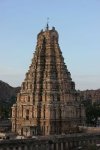
6. In the Vijayanagar temples the central part was occupied by the Garbhagriha—the sanctum cell where the presiding deity was installed.
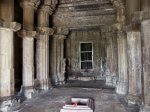
7. Amman shrine was meant for the consort of the God

Art under Vijaynagar Empire

1. Music: Vijayanagar period is known for origin of Carnatic music under Purandhar Das period known for origin of Rudraveens.

2. Dance: Bharatanatyam was promoted. Drama Yakshagana was a popular dance drama closely associated with temple walls. 
                                                                           3. Paintings: Themes of Ramayana and Tlahabharta on temple walls.

4. Sculpture: Largest number of portrait sculptures in this period. Portrait sculpture of Krishnadeva Raya and his queens is seen at Tirumala.

In the above ‘Cultural History of Vijayanagar’ deals with the cultural glorious epoch of Vjaynagar Empire. The kings of this empire were great patrons of music, literature and architecture which can see even today also. For example- Someshwar, Vidyashankara, Narasimhaswamy etc.
Vijayanagara empire

  1. Vijayanagara Empire

1336–1646

Extent of Vijayanagara Empire, 1446, 1520 CE this century is considered to be ‘a golden century’

Capital VijayanagaraPenukondaChandragiri[1]

Common language Kannada, Sanskrit, Telugu[2]

Religion —–Hinduism
Government—-Monarchy king


• 1336–1356—–Harihara I
• 1642–1646—–Sriranga III

History

• Established 1336
• Earliest records 1343
• Disestablished 1646 Currency —-Varaha

Sangama dynasty                            Harihara I1336–1356              

Bukka Raya I1356–1377           
Harihara Raya II1377–1404     
Virupaksha Raya1404–1405      

   Bukka Raya II1405–1406                    Deva Raya I1406–1422

Ramachandra Raya1422

Vira Vijaya Bukka Raya1422–1424
Deva Raya II1424–1446           Mallikarjuna Raya1446–1465   
Virupaksha Raya II1465–1485      
Praudha Raya1485

Saluva dynasty SaluvaNarasimhaDevaRaya1485-1491 Thimma Bhupala1491                 Narasimha Raya II1491–1505


    Tuluva dynasty                               Tuluva Narasa Nayaka1491–1503        Vira Narasimha Raya1503–1509      Krishna Deva Raya1509–1529          Achyuta Deva Raya1529–1542          Venkata I1542                                     Sadasiva Raya1542–1570


Aravidu dynasty                                      Aliya Rama Raya1542–1565            Tirumala Deva Raya1565–1572      Sriranga I1572–1586                          Venkata II1586–1614                        Sriranga II1614                                       Rama Deva Raya1617–1632              Venkata III1632–1642                      Sriranga III1642–164


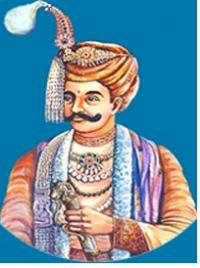
Sri krishnadevaraya(1509-1529)-the famous king of vijayanagara empire

Hampi-the world Heritage site

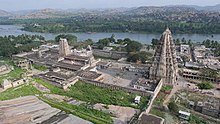
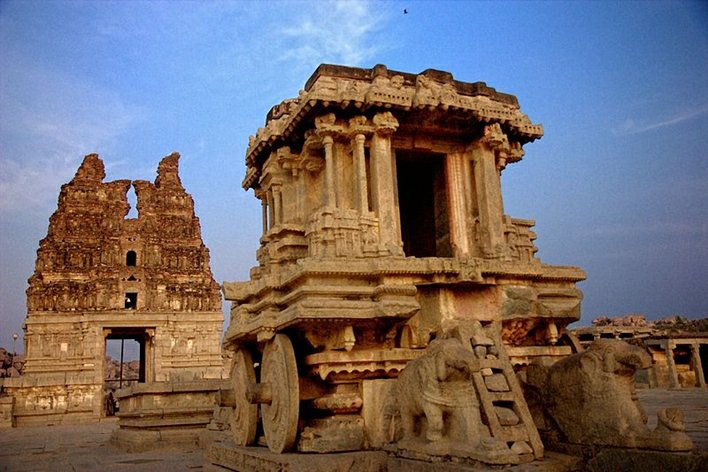
Hampi is an ancient village in the south Indian state of Karnataka. It’s dotted with numerous ruined temple complexes from the Vijayanagara Empire. On the south bank of the River Tungabhadra is the 7th-century Hindu Virupaksha Temple, near the revived Hampi Bazaar. A carved stone chariot stands in front of the huge Vittala Temple site. Southeast of Hampi, Daroji Bear Sanctuary is home to the Indian sloth bear. This belongs to world Heritage Site.

Virupaksha temple.

It was built under king devaraya The Virupaksha temple has survived through the years and never ceases to prosper.it is still pristine amidst the ruins that surround it. It attracts large groups of people in the month of December. he yearly chariot festival is done in the month of january-february.
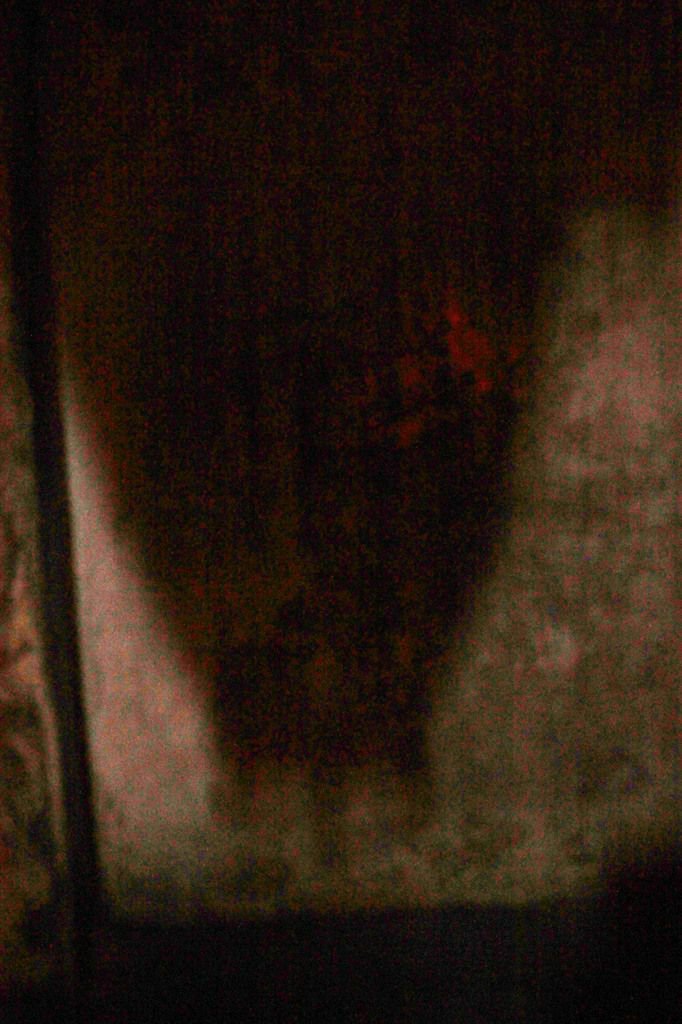
The above image is gopura is the one that casts shadow inside north west corner of the temple.but surprisingly the shadow is inverted.

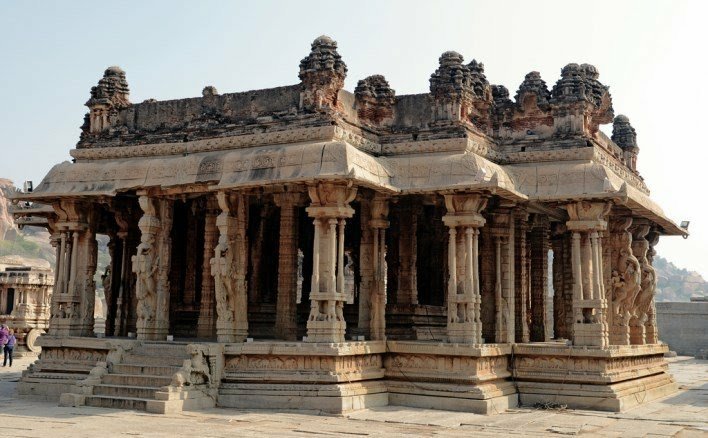
Vijaya vittala temple,hampi


The renowned Vittala Temple dates back to the 15th century. It was built during the reign of King Devaraya II (1422 – 1446 A.D.), one of the rulers of the Vijayanagara Empire. Several portions of the temple were expanded and enhanced during the reign of Krishnadevaraya (1509 – 1529 A.D.), the most famous ruler of the Vijayanagara dynasty. He played a significant role in giving the monument its present look.

The Vittala Temple is also known as Shri Vijaya Vitthala Temple. It is dedicated to Lord Vitthala, an incarnation of Lord Vishnu. An idol of Vitthala-Vishnu was enshrined in the temple. Legend has it that the temple was built as an abode for Lord Vishnu in his Vitthala form. However, the Lord had found the temple to be too grand for his use and had returned to live in his own humble home

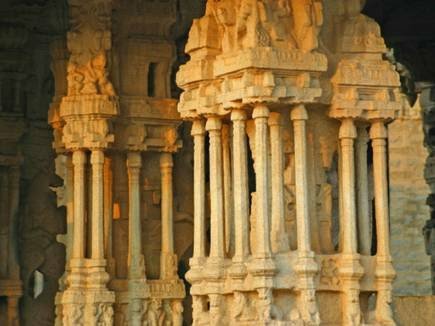
The large Ranga Mantapa is well-known for its 56 musical pillars, also known as SaReGaMa pillars. These have been attributed to the musical notes rising out of them. … Each note emitting from these pillars produce different sounds, which also change as the string, percussion and wind instrument being played.
This Stone chariot is of great fame in Vittala Temple, Hampi . Its stone wheels, each shaped in the form of a lotus, are capable of revolving. It represents the sprakling creativity of the artistes of the fifteenth century. We can this picture of architecture on 50rupee note.

Other places to visit in hampi

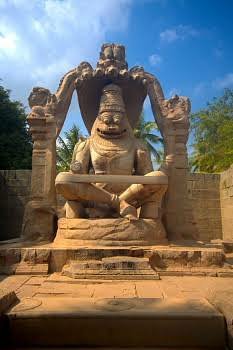
Ugra narasimha statue
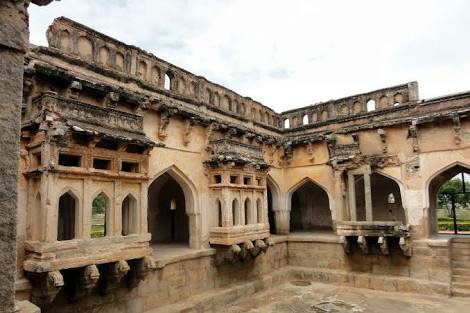
Queens bath
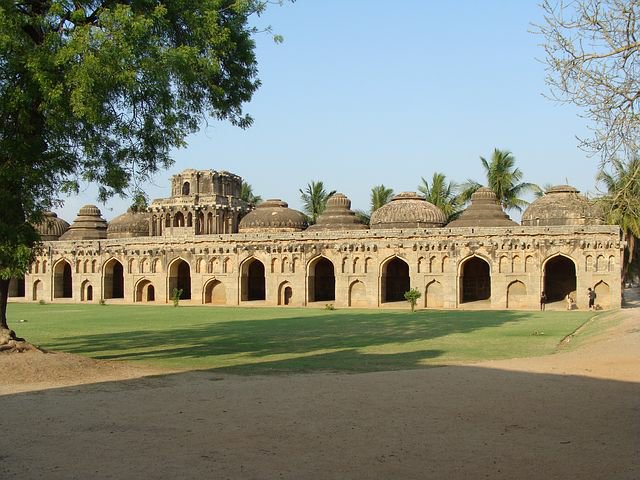
Elephants stable
Mahanavami dibba